
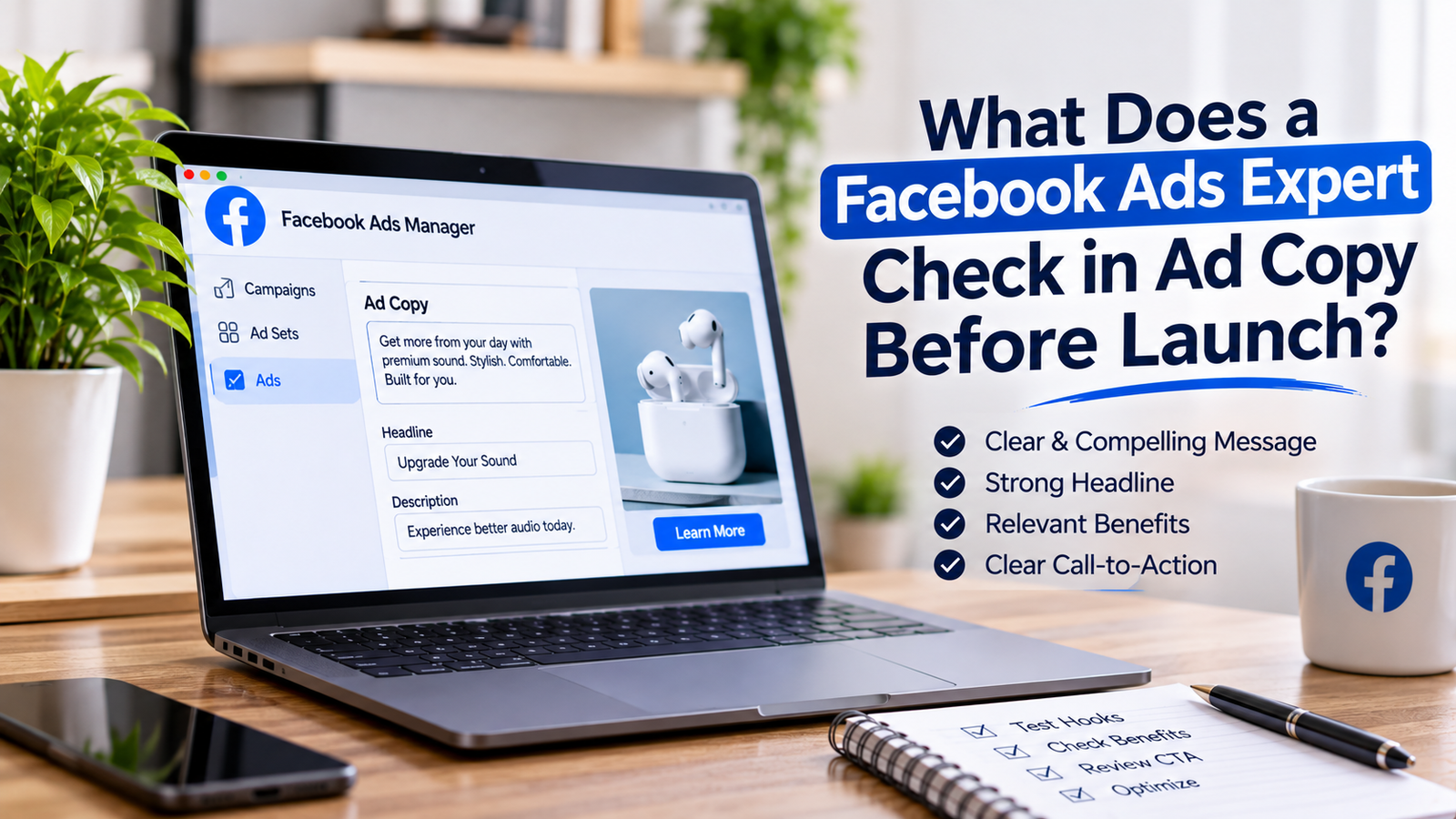
Ask any Facebook ads expert why two similar ads perform differently, and the answer is often hiding in the words around the creative. The image or video stops the scroll, but the caption and headline decide whether a stranger clicks, keeps scrolling or leaves confused. Because copy is quick to write, many advertisers finish it in a few minutes and move on to the next task.
That is a missed opportunity, because copy is also the cheapest part of an ad to improve. A new video can take days of production, while a sharper headline takes minutes. This guide covers what gets checked in primary text and headlines before an ad goes live, how those checks change between video and static formats, and how to test copy so every result teaches you something.
Why Does Ad Copy Matter If the Creative Already Stops the Scroll?
Creative and copy do different jobs. The creative earns a second or two of attention. The copy then has to turn that moment into understanding: what is this, who is it for and why should I act now? When the two disagree, people feel the mismatch even if they can’t explain it. An ad that opens on a frustrated customer and then tells the story of the brand’s founding loses the viewer, because the caption never answered the question the creative raised.
What Each Part of the Ad Should Do
Think of an ad as four parts working in order. The creative stops the scroll. The primary text adds context, proof or an offer. The headline states the outcome in one clear line. The call-to-action button tells people what the next click will do. When one part tries to do another part’s job, such as a headline that tries to tell the whole story, the ad feels crowded and the message gets lost.
How Copy Should Follow the Hook
Hook development usually focuses on the first seconds of a video or the first glance at an image, and good copy treats that moment as its starting point. If a video opens on dry skin, the caption can name the same problem in plain words and then move toward the solution. Starting with a different topic, such as shipping speed, forces the viewer to restart their thinking, and many people simply won’t.
How Long Should Primary Text Be?
There is no perfect length, but there is a right order. On mobile, only the first lines of primary text show before the “See more” link, so the strongest message has to sit at the top. Read each draft on your phone before approving it. If the first two lines make no sense on their own, rewrite them until they do.
Matching Length to Audience Temperature
Cold audiences, who have never heard of the brand, usually respond to short copy that names a problem and the outcome. Warm audiences, such as people who visited the product page, can handle more detail like ingredients, guarantees or comparisons with alternatives. Launches and sales work best when the offer leads and the explanation follows. Wherever you place it, put proof such as a short customer quote or a rating in the lines people actually read, not at the end of a long caption where most viewers never reach it.
Which Copy Structures Work for Most Facebook Ads?
You don’t need a fresh idea for every ad. Three simple structures cover most situations, and each suits a different kind of product or stage of awareness.
Problem, Solution, Proof
Name the problem, show how the product solves it, then back the claim up. For a reusable water bottle, that might read: Tired of bottles that leak in your bag? Ours has a locking lid and is rated by [number] verified customers. This structure works well for products that solve an obvious everyday annoyance.
Offer-Led Copy
Lead with the deal, then give one reason to trust it. For example: Free shipping this week, plus a 30-day return policy. This works for sales, launches and returning customers who already know the product, because the offer is the news. It works less well for cold audiences who still need to understand what you sell.
Proof-Led Copy
Open with a real customer result or quote, then connect it to the product. This suits higher-priced items and products that make big promises, because doubt is the main obstacle. Use only genuine reviews that you can show on request. Invented testimonials damage trust and can break advertising rules.
How Should Copy Change Between Video and Static Ads?
Copy That Supports Video
Many viewers watch without sound, so captions and on-screen text carry real weight. Use the primary text for what the video doesn’t say aloud, such as the offer, the guarantee or a delivery detail, instead of pasting in the script. Repeating the voiceover in the caption wastes space and feels repetitive to anyone who both watches and reads.
Copy That Supports Static Images
A good static ad strategy accepts that one image gets one moment to land its message. That leaves more work for the copy, which can explain the benefit, answer a common objection or add proof the image has no room for. Avoid repeating the text inside the image word for word. If the image says “Free shipping,” let the caption explain why the product is worth buying.
How Do You Write Headlines That Add Something New?
The headline sits right next to the button, so it should say what the person gets or what happens next. Compare these two styles:
- Weak: “Shop Now” or “The Best Bottle Ever”
- Stronger: “Cold for 24 hours, guaranteed” or “Free shipping over $50” (use your real offer)
Simple Rules for Stronger Headlines
Stick to one idea per headline, and be concrete instead of clever. Don’t repeat the primary text, because the headline is valuable space for new information. Finally, never promise anything you can’t prove. A claim that sounds impressive but can’t be backed up creates refund requests and ad rejections later.
How Do You Test Ad Copy So You Learn Something?
Change One Thing at a Time
Creative testing only teaches you something when a single element changes. Run the same image or video with two or three primary texts and keep the audience, budget and placement identical. Test big differences first, such as short against long, or offer-led against proof-led, before adjusting individual words. Small word swaps rarely produce a clear signal unless you have a large budget.
Judge Results by Purchases
Judge winners by cost per purchase rather than clicks alone. Curiosity-driven copy can raise clicks while attracting people who never buy. Log each test with the creative, the copy version, the spend and the cost per purchase. After a few rounds, patterns appear, such as which opening lines or offers your audience keeps choosing.
Which Copy Mistakes Quietly Hurt Results?
Mistakes in the Message
The most common problems are easy to fix once you spot them. Copy that repeats the hook word for word adds nothing new. Vague promises like “transform your routine” say little unless they explain how. An offer or guarantee buried at the bottom of a long caption does no work, because few people read that far.
Mistakes That Risk Rejection
Some mistakes cost more than clicks. Meta’s advertising standards restrict wording that implies you know personal details about the viewer, such as health, finances or identity, and ads that break the rules can be rejected. Describe the benefit of the product instead of describing the person. Also make sure the landing page matches the ad: if the caption mentions a discount, the page should show it immediately.
When Is It Time to Ask for Expert Help?
If several rounds of rewriting haven’t moved results, the problem may sit outside the words: weak angles, unreliable tracking or a landing page mismatch. A creative strategist can decide which angles deserve copy tests in the first place, so your testing isn’t built on guesses. Outside help works best when you can share your results log, because it shows what has already been tried.
Frequently Asked Questions About Facebook Ad Copy
How long should Facebook ad primary text be?
There is no fixed length. Put the key message in the first two lines, then add detail only if your audience needs it.
Should the headline repeat the primary text?
No. Use the headline for the offer or outcome and keep the primary text for context and proof.
Does copy matter more for video or static ads?
It matters for both, but static ads usually lean on copy more because the image explains less than a video can.
How many copy variations should I test at once?
Two or three is enough for most accounts. More variations split your budget and blur which change made the difference.
Can I use emojis in Facebook ad copy?
Yes, sparingly, and only if they suit your brand. Test a version with and without them instead of assuming they help.
Why was my ad rejected because of its copy?
Common causes are language about personal attributes, exaggerated claims and misleading promises. Review Meta’s advertising standards, edit the wording and resubmit.
Final Thoughts
Strong creative earns the pause, but clear copy gives people a reason to continue. Let the creative start the story, let the primary text add context and proof, and let the headline state the outcome. Change one thing at a time, keep notes, and fix the weakest line first. Small, honest improvements to your words often lift results more than another round of new creative.
Ready to Implement This in Your Ad Account?
Stop guessing why your Meta ads are stalling. Let's look inside your Ads Manager together and find the high-leverage growth bottlenecks.
Book 15-Minute Strategy Call →