
A 30-Day Ad Creative Plan for Meta: What to Make, Test and Retire?
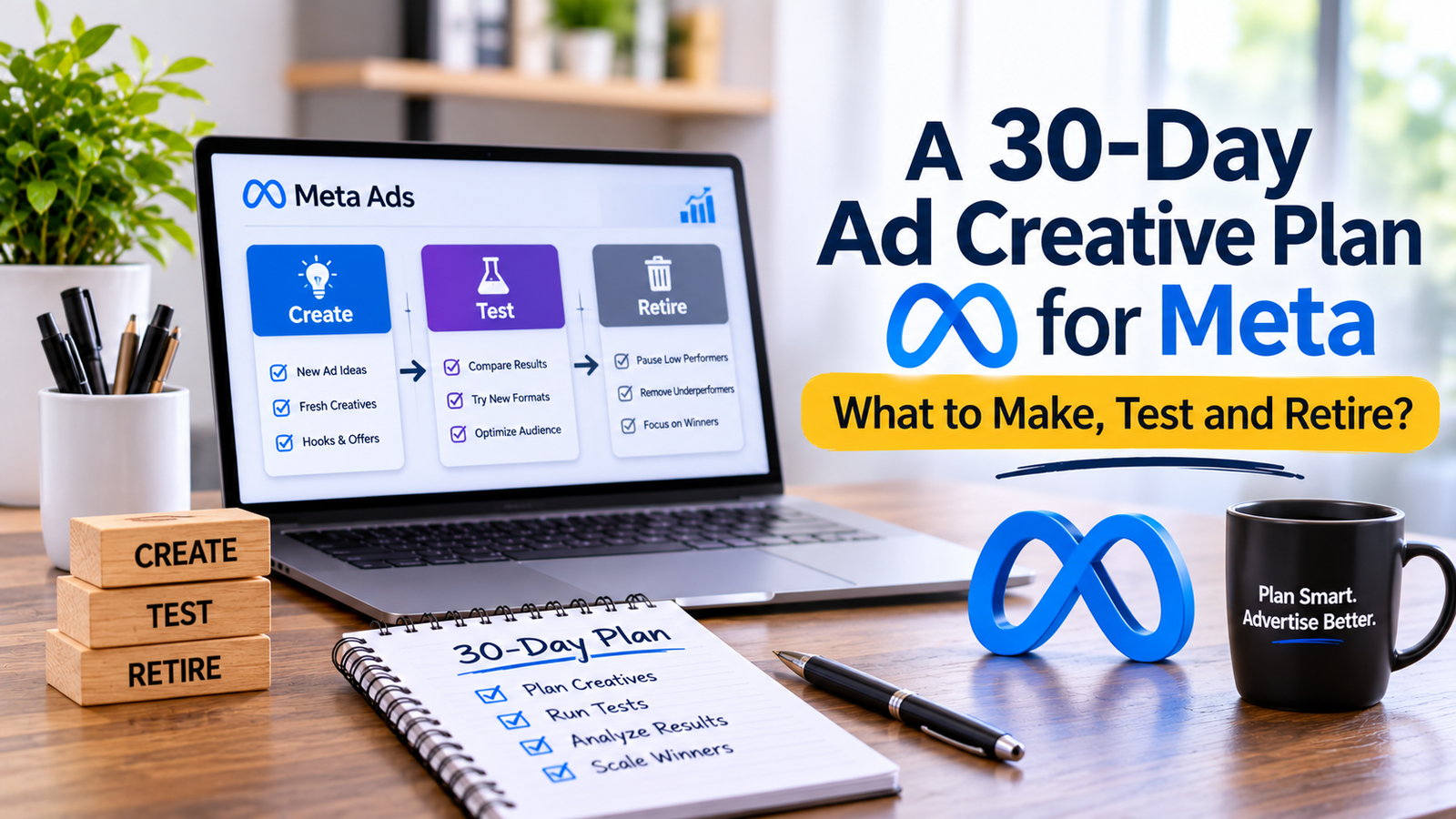
Most ad accounts run on panic. An ad stops working, someone scrambles to produce a replacement, it goes live untested and the cycle repeats a few weeks later. It is exhausting, expensive and almost impossible to learn from.
A simple monthly creative plan breaks that cycle. It gives you a rhythm for deciding what to make, how to test it and when to let an ad go. This guide lays out a 30-day plan you can adapt to almost any Meta account, whether you run one product or fifty.
Why a Monthly Creative Plan Beats Reacting to Problems
Creative wears out. The same people see the same ad again and again, attention fades and results slip. If you only create new ads when old ones fail, you are always a step behind, and every replacement is a rushed guess.
A plan flips the order. Fresh ideas are being researched and tested while the current ads are still working, so a replacement is ready the moment one is needed. It also turns every month into a learning cycle, because each round of ads is designed to answer a question.
Before Day One: Set Up the Foundations
Two things need to be in place before any creative is made. First, you need reliable tracking, because you cannot judge ads on data you do not trust. Second, you need a clear goal, such as what you can afford to pay for a customer or lead.
It also helps to decide who owns each part of the process. In small teams, one person may research, brief and review. In larger ones, a creative strategist usually leads the thinking while designers, editors and creators handle production, and a media buyer manages delivery. Whatever the setup, everyone should know who makes the final call.
Week One: Research and Angle Selection
Gather What Customers Already Say
Start by reading reviews, support messages, comments and any survey answers you have. Highlight the problems people describe, the surprises they mention and the words they use. This research is the raw material for the entire month.
Review Last Month's Results
Look at which ads earned attention and which did not. Ask why. Was it the opening, the angle, the format or the audience? Even a rough note about what worked gives you a head start.
Choose a Small Set of Angles
An angle is a reason someone should care, such as saving time, avoiding a frustration or trusting other customers. Pick a handful of genuinely different angles for the month. Different angles teach you far more than slightly different versions of one message.
Write the Openings
For each angle, draft several different first lines. The opening decides whether anyone sees the rest, which is why careful hook development deserves real time. Keep each line short, specific and spoken the way a real person would say it.
Week Two: Produce and Launch a Small First Batch
Resist the temptation to build dozens of ads. Producing a huge batch before you know what works is the most common reason plans collapse. Start with a small handful of ads, one for each angle, and launch them in a testing setup separate from your main campaigns.
Keep the production simple. Quick images, simple creator videos and straightforward edits are enough at this stage. The goal is not polish but information. If an angle earns attention, you can invest more in it later.
Plan the test before launch. Decide which ads will run together, how long they will run and what you want to learn. Keep the audience and budget consistent so the creative is the only real difference.
Week Three: Read the Results and Iterate
By now the first ads should have gathered enough delivery to show early patterns. Resist the urge to call winners after a day or two. Wait for a meaningful pattern, then look at the whole chain: how many people stopped, how many stayed, how many clicked and what each result cost.
Keep and Develop What Works
When an angle shows promise, build new versions around it. Change the opening, the format or the person speaking, while keeping the core idea. This is how one good insight becomes a family of ads.
Retire What Clearly Failed
Ads that have had a fair chance and clearly failed should be switched off without drama. Write down what you learned from them, because a failed angle is still useful information.
Plan the Formats
Now is a good time to decide which winners deserve a bigger production. A sound video ad strategy plans the goal, length, framing and platform before filming begins, so you spend production money only on ideas that have already earned it.
Week Four: Refresh, Record and Plan the Next Month
The last week is about keeping the engine running. Check your older ads for signs of fatigue, such as falling click rates, rising costs and growing frequency among the same audience. Introduce fresh versions before performance drops sharply, not after.
Then record what you learned. A simple document with the angle, the opening, the result and your best guess about why is enough. Over a few months, these notes become a map of what your customers respond to, and next month's research starts from knowledge instead of a blank page.
Finally, save the raw material. Keep every clip, opening, testimonial line and image in an organized folder. This library lets you remix content into new ads without commissioning everything from scratch.
How Many Ads Do You Actually Need?
There is no universal number, and advice online varies enormously. The right amount depends on your budget, how quickly your ads tire and how much you can produce without losing quality. A small account with a modest budget may do well with a few new ads each cycle, while a large account spending heavily will need more.
A practical way to decide is to watch how fast your best ads fade. If they hold for a long time, you can produce fewer. If they wear out quickly, you need a faster rhythm. Start small, observe and adjust.
Common Planning Mistakes
The first mistake is producing too much too soon. A huge batch launched with no structure produces lots of data and few answers. The second is testing decorations instead of ideas, such as swapping colors while the message stays the same. The third is never retiring anything, which leaves weak ads draining budget.
The fourth is skipping the record-keeping step. Without notes, every month starts from zero, and the same mistakes return. Finally, many advertisers forget the page after the click. The best creative cannot rescue a slow or confusing landing page.
Adapting the Plan to Your Business
Treat this plan as a framework, not a rulebook. A business with a long sales cycle may need longer test windows. A seasonal brand may shift the schedule around key dates. A solo founder may combine research and production in the same week.
What matters is the rhythm: research, launch small, read honestly, refresh and record. If you want to see how this kind of process works in real accounts, you can read the case studies and notice how often the winning idea came from careful research.
Frequently Asked Questions
How often should I launch new ad creative on Meta?
It depends on your spend and how quickly your ads fatigue. Many advertisers work in regular cycles, such as weekly or monthly, instead of waiting for performance to drop.
How long should I test a new ad before judging it?
Long enough to gather a meaningful pattern of results, which usually means days or weeks rather than hours. Avoid deciding after a single day.
Should I test images or video first?
Images are usually quicker and cheaper to make, which makes them handy for testing angles. Winning angles can then be developed into video.
What should I do with ads that stop working?
Do not delete the idea, only the ad. Record what you learned, and consider whether the angle can return in a new form later, with a fresh opening or format.
Can a small business follow a monthly creative plan?
Yes. Start with a very small batch and simple production. The rhythm matters more than the volume.
Final Thoughts
A good creative plan does not require a big team or a big budget. It requires a steady rhythm: research what customers say, launch a small batch, read the results honestly, refresh before fatigue sets in and keep notes so each month starts smarter.
If you would like help building a creative plan for your own account, you are welcome to get in touch and talk through where to begin.
Ready to Implement This in Your Ad Account?
Stop guessing why your Meta ads are stalling. Let's look inside your Ads Manager together and find the high-leverage growth bottlenecks.
Book 15-Minute Strategy Call →